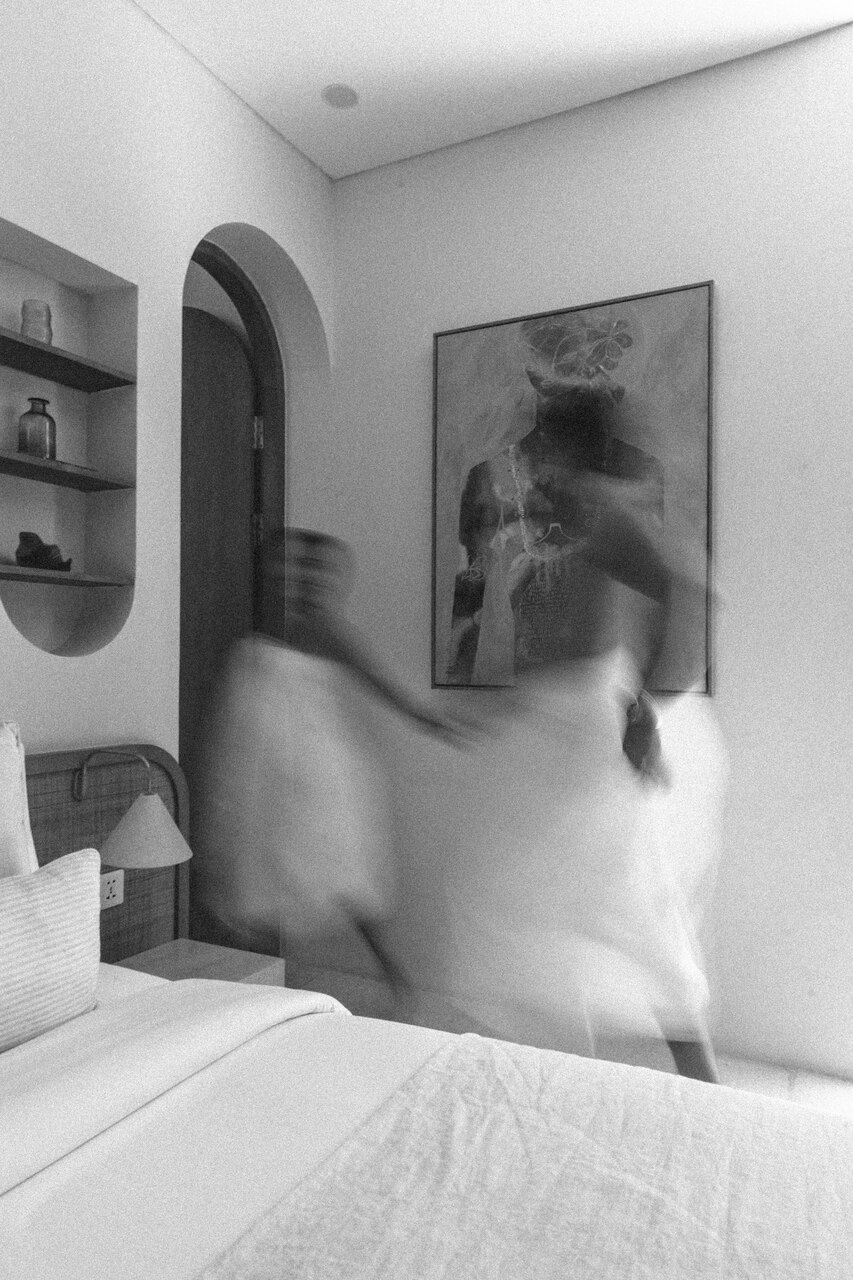
Why does your brain love minimalism?
Today the environment constantly demands our attention; luxury is no longer defined by what we possess. Today, true luxury is space. And it's not just about the size of the apartment but about the "breath" for our neurons. Scientific research confirms what we instinctively feel when entering a harmoniously arranged interior: order in the home is order in the mind.
Architecture of Concentration
Our brain is a powerful processor, but it has its limits. When you surround yourself with chaos – a pile of unread magazines, scattered clothes, or a disorganized desk – your eyes constantly scan these objects. Researchers from Princeton University Neuroscience Institute have shown that physical clutter limits the ability to process information.
In short: every unnecessary object in your view is "noise" competing for your attention. When you clear the space, you free up cognitive resources. The effect? Higher creativity and the ability to focus deeply, which is a scarce commodity today.
Cortisol vs. Cashmere Blanket
Clutter is not just an aesthetic issue; it’s a biological one. Chronic exposure to a cluttered environment raises levels of cortisol – the stress hormone. This is particularly felt strongly by women; studies published in Personality and Social Psychology Bulletin showed that people describing their homes as "messy" more often complain of fatigue and low mood.
Clean space acts like a visual calming agent. It allows the nervous system to shift from "fight or flight" mode to a regeneration mode.
Ritual, Not Obligation
At S•P Residence Care, we believe that caring for the environment is a form of self-care. Instead of thinking of cleaning as a burdensome obligation, it's worth viewing it as a process of curating your own life.
Selection: Choose only what adds value or pure beauty.
Light: Order allows light to operate freely, which regulates your circadian rhythm.
Smell: Clean space is a basis for aromatherapy – a sandalwood scented candle will resonate fully only where there is harmony.
New Minimalism
We are not advocating for sterile, cold interiors devoid of soul. It's about intentionality. Your home should be a sanctuary that supports you, not another to-do list. When you put things in their place, you send a signal to your brain: "Everything is under control. You can relax.”.
In the age of overstimulation, the most beautiful gift you can give yourself is an uninterrupted view of your own thoughts.
Today the environment constantly demands our attention; luxury is no longer defined by what we possess. Today, true luxury is space. And it's not just about the size of the apartment but about the "breath" for our neurons. Scientific research confirms what we instinctively feel when entering a harmoniously arranged interior: order in the home is order in the mind.
Architecture of Concentration
Our brain is a powerful processor, but it has its limits. When you surround yourself with chaos – a pile of unread magazines, scattered clothes, or a disorganized desk – your eyes constantly scan these objects. Researchers from Princeton University Neuroscience Institute have shown that physical clutter limits the ability to process information.
In short: every unnecessary object in your view is "noise" competing for your attention. When you clear the space, you free up cognitive resources. The effect? Higher creativity and the ability to focus deeply, which is a scarce commodity today.
Cortisol vs. Cashmere Blanket
Clutter is not just an aesthetic issue; it’s a biological one. Chronic exposure to a cluttered environment raises levels of cortisol – the stress hormone. This is particularly felt strongly by women; studies published in Personality and Social Psychology Bulletin showed that people describing their homes as "messy" more often complain of fatigue and low mood.
Clean space acts like a visual calming agent. It allows the nervous system to shift from "fight or flight" mode to a regeneration mode.
Ritual, Not Obligation
At S•P Residence Care, we believe that caring for the environment is a form of self-care. Instead of thinking of cleaning as a burdensome obligation, it's worth viewing it as a process of curating your own life.
Selection: Choose only what adds value or pure beauty.
Light: Order allows light to operate freely, which regulates your circadian rhythm.
Smell: Clean space is a basis for aromatherapy – a sandalwood scented candle will resonate fully only where there is harmony.
New Minimalism
We are not advocating for sterile, cold interiors devoid of soul. It's about intentionality. Your home should be a sanctuary that supports you, not another to-do list. When you put things in their place, you send a signal to your brain: "Everything is under control. You can relax.”.
In the age of overstimulation, the most beautiful gift you can give yourself is an uninterrupted view of your own thoughts.